Key Takeaways
A turf installation company Vista California homeowners hire typically delivers a layered installation system—site prep, base construction, drainage planning, turf seaming, edge fastening, and infill—so the finished lawn drains correctly, looks consistent, and holds up to everyday use. Estimates vary most when the site needs more demolition, access work, grading, drainage corrections, or specialized turf options, so comparing bids depends on written scope and installation method, not just price per square foot.
- Installation quality depends on what’s underneath: Long-term performance is driven by careful site prep, a properly built and mechanically compacted aggregate base, and correct grading and drainage strategy to avoid issues like puddles, wrinkles, unevenness, and settling.
- Drainage and weeds require realistic expectations: Proper drainage comes from slope plus a permeable base and a clear exit path for water, while weed barrier can reduce weed pressure from below but won’t stop airborne seeds that sprout in dust and organic debris.
- Comparing bids means verifying scope details: Beyond square footage, costs commonly shift with access constraints, demolition and disposal, base depth and compaction, drainage or slope corrections, seam placement, edge restraint, product choice, and warranty terms, so proposals should specify what is included.
A turf installation company Vista California provides site preparation and synthetic turf installation services to create a low-maintenance lawn that looks consistent year-round. In Vista’s warm, dry seasons, artificial turf is often chosen to reduce irrigation needs while still keeping outdoor areas usable for families, pets, and entertaining.
Quality results depend on technical steps such as proper grading for drainage, compacted aggregate base installation, weed barrier placement, seam and edge fastening, and infill selection. Pricing is typically influenced by square footage, access to the yard, removal of existing grass or hardscape, drainage corrections, slope work, and whether the project includes pet-friendly or high-traffic turf options.
This guide explains common services, the main cost drivers to expect in estimates, and how to compare contractors based on installation methods, materials, warranty terms, and proof of licensing and insurance where applicable.
What a Turf Installation Company in Vista California Typically Provides
A turf installation company Vista California homeowners hire usually handles everything from demolition and base construction to turf layout, seaming, and final grooming. The goal is to deliver a surface that drains correctly, looks natural from multiple angles, and holds up to real-life use.
Most projects start with a site visit to evaluate slope, soil type, irrigation lines, and how water currently moves through the yard. In Vista, warm weather and dry periods make water-wise landscaping appealing, but long-term performance still depends on what’s underneath the turf—not just the product chosen.
- Site evaluation and measurement for accurate estimating
- Removal of existing sod, weeds, or failed landscape materials
- Grading and drainage corrections to prevent pooling
- Aggregate base installation and mechanical compaction
- Weed barrier placement where appropriate for the site
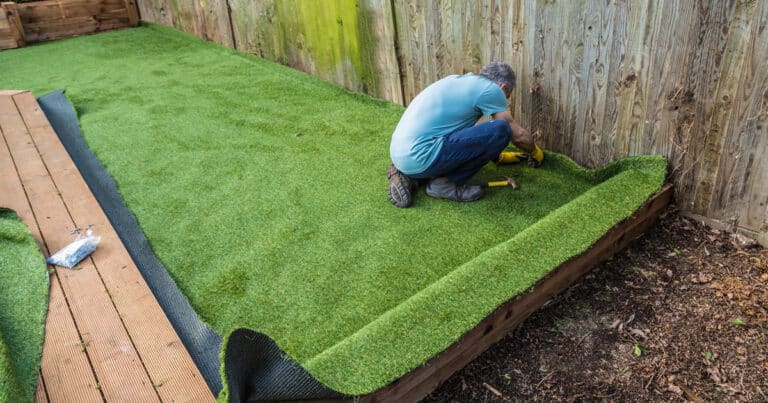
- Turf cutting, seam layout, and edge fastening
- Infill application and power-brooming for stability and appearance
How Synthetic Turf Installation Works (Step-by-Step)
Professional synthetic turf installation is a layered system: subgrade preparation, base construction, drainage strategy, and precise turf fastening. Skipping steps can lead to wrinkles, unevenness, odors (especially in pet areas), and premature wear.
1) Site Prep: Removal, Rough Grading, and Utilities Check
Site prep creates the foundation for drainage and smoothness, and it’s where many hidden issues are discovered. A careful contractor will confirm where sprinklers, low-voltage wiring, and drains are located before digging.
Common site-prep tasks include cutting out sod, excavating to the planned base depth, and shaping the area so water sheds away from structures. If you’re keeping some irrigation for surrounding beds, the installer may cap, reroute, or convert heads so they don’t spray directly onto the turf.
- Locate and protect irrigation valves, cleanouts, and wiring
- Remove sod/roots to reduce future settling
- Rough-grade to establish a consistent slope for runoff
- Identify low spots that may need additional drainage solutions
2) Base Installation: Aggregate, Compaction, and Leveling
The compacted base is what makes turf feel firm, look even, and resist shifting over time. Base quality is one of the biggest differences between a turf that stays smooth and one that develops dips or ripples.
Installers typically bring in an aggregate base, spread it in lifts, and compact it with a plate compactor. Final grading and screeding are used to create a consistent plane, with special attention around hardscape edges, where height transitions are most noticeable.
- Install aggregate base to the required depth for the site and intended use
- Compact in layers to reduce future settling
- Fine-grade to correct small undulations
- Verify final elevations at walkways, patios, and thresholds
3) Drainage Strategy: Preventing Puddles and Saturated Areas
Drainage is a design decision as much as an installation step, especially for shaded yards, clay-heavy soils, or areas that already collect runoff. Good turf drainage relies on both surface slope and a base that allows water to move through and away.
If the yard has known drainage issues, a contractor may recommend solutions such as additional grading, targeted sub-drains, or tying into existing drains when feasible. It’s important to discuss how rainwater will exit the turf area before installation begins, because drainage upgrades can change the scope and cost.
- Surface drainage: slope directs water across the turf to an exit point
- Subsurface drainage: base material and optional drains move water below the turf
- Edge management: prevent water from being trapped by borders or hardscape
If you’re troubleshooting standing water or soggy spots, this guidance on signs your artificial grass lawn has drainage problems can help you identify what to flag during an estimate.
4) Weed Barrier: Where It Helps (and Where It Doesn’t)
Weed barrier can reduce weed pressure from below, but it isn’t a total weed-proofing solution. Airborne seeds can still sprout in dust or organic debris that collects on the surface over time.
A contractor may recommend barrier fabric in areas with aggressive weeds or where soil conditions make long-term maintenance harder. However, barrier choice and placement should work with the drainage plan, because improper layering can trap sediment or create unevenness if installed poorly.
- Helpful: persistent weeds from the subgrade, disturbed soil areas
- Limited value: preventing windblown seeds on the turf surface
- Key requirement: fabric must be flat and secured to avoid bunching
5) Turf Layout, Seaming, and Grain Direction
Seaming and layout determine whether the lawn looks continuous or shows visible lines. Installers plan grain direction so the turf looks consistent from primary viewing angles such as patios, windows, and pool decks.
Seams require clean cuts, proper seam tape placement, and adhesive or fastening methods appropriate to the product. A good installation minimizes seam visibility by matching pile direction and keeping seams out of high-visibility corridors whenever possible.
- Confirm pile/grain direction before cutting large sections
- Place seams away from focal lines and high-traffic runways when possible
- Use stable seaming methods compatible with the turf backing
- Weight and cure seams as needed to avoid peaking
6) Edge Restraint and Fastening: Keeping Turf Tight Over Time
Edges are where turf most commonly lifts, separates, or shows gaps if fastening is weak. Strong perimeter restraint helps turf stay tight through temperature swings, foot traffic, and routine brushing.
Depending on the yard design, edges may be secured to bender board, concrete, pavers, timber, or other borders. It’s worth asking how the contractor handles inside corners, curves, and transitions to mulch or planting beds, since these details affect long-term neatness.
- Mechanical fastening at the perimeter to reduce movement
- Clean edge cuts for crisp borders and less fraying
- Transition planning at gates, steps, and patio edges
7) Infill Selection: Stability, Cushion, and Cooling Tradeoffs
Infill helps support the turf blades, improves footing, and adds weight to reduce shifting. The “right” infill depends on how the area will be used—pets, kids, heavy traffic, or decorative landscaping.
Not every turf system requires the same infill approach, and there are tradeoffs. Some infills can track more, some may retain heat differently, and pet areas often require an approach that supports drainage and cleaning routines.
- High-traffic yards: prioritize stability and resilience
- Kids’ play spaces: consider cushioning needs and fall-zone planning
- Pet runs: prioritize drainage and wash-down practicality
- Putting greens: select infill and base design for ball roll performance
Services Homeowners Commonly Request in Vista
Most residential turf projects in Vista focus on creating durable outdoor living space that looks clean year-round. Contractors often tailor turf type, base build, and edging details to match how you actually use the yard.
Popular project types include front-yard curb appeal upgrades, backyard “hangout” lawns, side-yard dog runs, and play zones. If you want a yard that’s easier to clean for dogs, pet turf & artificial grass for dogs is a common starting point for comparing drainage design, odor-control considerations, and surface durability.
- Decorative landscape turf for front and back yards
- Pet-friendly turf zones with rinse-down access
- Putting greens designed for speed and ball response
- Playground areas where cushioning is part of the build plan
- Low-maintenance side yards and utility strips
Main Cost Drivers You’ll See in Turf Installation Estimates
Estimates vary because turf installation is part landscaping and part construction: access, demolition, grading, and drainage can outweigh the turf material itself. Understanding cost drivers helps you compare bids based on scope rather than just a price per square foot.
When comparing proposals, look for line items that clarify what’s included and what’s assumed. If one bid omits excavation, base compaction, or debris hauling, it may look cheaper while leaving critical work undefined.
- Square footage and shape complexity: Curves, tight corners, and multiple sections increase cutting and seaming time.
- Access constraints: Narrow gates, stairs, or long distances to the backyard affect labor and hauling.
- Demolition and disposal: Removing sod, weeds, decomposed granite, or old turf changes the scope.
- Base depth and material needs: Softer soils and higher-use areas may require more base work.
- Drainage corrections: Low spots, downspout discharge, and runoff patterns may require regrading or drains.
- Slope and retaining needs: Hillsides may need stabilization and careful compaction to avoid slippage.
- Product choice: Different face weights, blade shapes, and backing systems can change both cost and performance.
- Edge details: Concrete mow strips, paver borders, and custom transitions add labor and materials.
Quick Comparison: Product and Design Choices That Affect Performance
Not all synthetic turf systems behave the same, and some “features” only matter for certain yards. Use this table as a practical checklist to discuss materials and methods during your estimate.
| Feature / Decision | What to Verify in the Estimate | Vista Project Considerations |
|---|---|---|
| Drainage approach | How water exits the area (slope plan, base build, and any drains) | Confirm a path for runoff during heavier storms and in shaded low spots |
| Base construction | Base material type, depth assumptions, and compaction method | Ask how the base will resist settling where the soil has been irrigated for years |
| Seam placement | Number of seams, seam method, and where seams will land visually | Plan seams away from main viewing angles (patio, living room windows) |
| Edge restraint | How edges will be secured (nailing pattern, adhesive, border attachment) | Critical for side yards and pet runs where movement and cleaning are frequent |
| Infill plan | Infill type, approximate application approach, and grooming steps | Discuss heat, tracking, and maintenance expectations for your household |
How to Compare Contractors Beyond the Price
When you compare turf bids, the most useful differences are in process: excavation depth, compaction standards, seam plan, and edging method. A thorough proposal explains what will be built, not just what turf will be installed.
Because many installation quality factors are hard to see after the turf is down, ask questions that reveal whether the contractor has a repeatable method. You’re looking for clear answers, written scope, and warranty terms that align with how the area will be used.
- Scope clarity: Does the bid specify demolition, base depth, compaction, edging, and cleanup?
- Drainage plan: Do they describe how water will move off the turf and where it goes?
- Seaming method: Can they explain seam layout and how they’ll reduce visible lines?
- Materials list: Is the turf product, backing type, and infill plan defined?
- Warranty terms: Are material and workmanship warranties separate and clearly described?
- Proof of coverage: Can they provide licensing and insurance documentation where applicable?
Maintenance Expectations: What “Low-Maintenance” Really Means
Artificial grass is lower maintenance than natural grass, but it still needs basic care to stay clean, upright, and drain properly. A simple routine prevents compaction, keeps debris from building up, and reduces odor risk in pet areas.
Most homeowners do best with light, frequent upkeep rather than occasional deep cleans. If the yard is under trees or sees heavy use, plan on more frequent debris removal and periodic brushing to maintain blade posture.
- Remove leaves and organic debris before it breaks down into fine material
- Rinse dusty areas occasionally, especially along edges and walkways
- Brush or broom high-traffic lanes to stand fibers back up
- Address pet waste quickly and rinse as needed to reduce odor buildup
- Inspect edges and seams periodically so small issues don’t grow
For practical cleaning habits that fit local conditions, see these cleaning tips for all types of artificial grass.
Limitations and Common Mistakes to Avoid
Artificial turf solves many pain points, but it isn’t a universal fix for every landscape problem. The best outcomes happen when expectations match the site conditions and the installation method.
Heat retention, drainage limitations, and edge detailing are common issues when planning is rushed. It’s also important to remember that “weed-free forever” is not realistic if dust and organic debris are allowed to accumulate on top of the turf.
- Underbuilding the base: Can lead to settling, ripples, and uneven seams.
- Ignoring drainage: Creates puddles, soggy spots, and lingering odors in pet areas.
- Poor seam planning: Leaves visible lines, especially when pile direction changes.
- Weak edging: Causes lifting and gaps, particularly along curves and borders.
- Skipping maintenance: Encourages weeds in surface debris and compacts infill in traffic lanes.
If you want a broader overview of what the material is and how it’s used, artificial turf provides general background and terminology that can make contractor conversations easier to follow.
Planning Your Project in Vista: A Simple Checklist for a Better Result
A little planning before you request bids makes it easier to get accurate estimates and avoid change orders. The checklist below helps you define how the turf should look, feel, and function for your household.
- Define the use: Pets, kids, entertaining, decorative curb appeal, or sports practice.
- Walk the site after rain (if possible): Note where water pools or flows.
- Decide on edges: Identify where turf meets pavers, mulch, planters, or fences.
- Call out access constraints: Gate width, stairs, and hauling routes to the backyard.
- List special requirements: Odor control priorities, allergy concerns, or a softer feel underfoot.
- Ask for a written scope: Ensure base, compaction, seams, edging, infill, and cleanup are included.
With a clear scope and realistic expectations, you’ll be able to compare contractors on workmanship and method—not just a number—so your installation looks consistent, drains well, and stays functional through Vista’s changing seasons.
Frequently Asked Questions
Get a Clear, Written Turf Installation Plan for Your Vista Property
If you’re considering synthetic grass to cut watering and keep your yard looking consistent, a site-specific evaluation can help you avoid common issues like uneven settling, visible seams, or water that has nowhere to go. A straightforward conversation about drainage, base depth, edging, and infill makes it easier to compare bids on real scope—not vague “per square foot” numbers.
Artificial Lawns Vista can review your layout, access constraints, and how you plan to use the space (pets, play, entertaining) so your estimate reflects the prep work and installation details that affect long-term performance.