Key Takeaways
Synthetic grass installation Vista homeowners choose tends to succeed long-term when the scope is built around the site—especially base prep, grading, and drainage—rather than the turf name alone. Comparing itemized proposals (demo, base depth/compaction, seaming, edging, infill, and drainage responsibility) helps prevent shortcuts that can later show up as pooling, visible seams, or ripples.
- Cost is driven by prep and site conditions: Total price is mainly influenced by square footage, access and haul-out, removal/disposal, drainage corrections, base thickness/materials, edging details, and turf/infill selection, so two same-size Vista yards can price out very differently.
- Base, grading, and drainage matter most in Vista: Vista’s long dry stretches and occasional intense rain make correct grading, compaction in lifts, and a defined drainage path essential to avoid pooling and keep the surface performing year-round, especially in boxed-in yards.
- Workmanship details prevent common failures: A professional install should include weed barrier placement, careful layout with matched grain, secure seaming with proper cure times, and strong perimeter fastening, since most problems trace back to base, drainage, or seam/edge work rather than the turf itself.
Synthetic grass installation Vista homeowners request typically involves evaluating the site, preparing a stable base, and selecting turf that matches the yard’s use—pets, play areas, or decorative landscaping. Total cost is mainly driven by square footage, access to the space, existing irrigation or hardscape removal, drainage needs, and the quality of the infill and edging details.
In Vista’s warm, dry conditions, proper grading and drainage are essential to prevent water pooling and to keep the surface performing well year-round. A professional install should include thorough base compaction, weed barrier placement, secure seaming, and perimeter fastening; cutting corners in any of these steps can lead to visible seams, ripples, or premature wear. Installers should also follow basic jobsite safety practices when using compactors, cutters, and adhesives.
This guide breaks down typical pricing factors, the step-by-step installation process, and how to compare local installers based on materials, workmanship standards, warranties, and project scope so you can choose the right fit for your property.
What drives the cost of synthetic grass installation in Vista?
Most synthetic grass installation Vista projects are priced based on site conditions and the level of prep work required, not just the turf you choose. Understanding the biggest cost drivers helps you compare bids fairly and avoid surprises once excavation starts.
Two yards with the same square footage can price out very differently in Vista because access, soil condition, and drainage needs often dictate labor and base materials. If you’re comparing proposals, ask each installer to describe what is included for demolition, base depth, compaction method, seaming, and edging—those are where “apples-to-apples” comparisons tend to break down.
- Square footage and layout complexity (curves, islands, steps, narrow side yards, multiple levels)
- Access and haul-out (wheelbarrow-only paths, stairs, gated side yards, limited parking)
- Removal and disposal of existing sod, weeds, decomposed granite, irrigation lines, or hardscape
- Drainage corrections (regrading, adding drain rock, installing area drains or tying into existing drainage)
- Base thickness and materials (type of aggregate, fines content, and whether stabilization is needed)
- Edging details (bender board, concrete mow strip, nailer boards, or existing hard edge condition)
- Turf and infill selection (pile height, face weight, backing type, infill type and quantity)
- Special-use upgrades (pet deodorizer, extra drainage layers, shock pads for play areas, putting green build-up)
Because Vista sees long dry stretches and occasional intense rain, drainage and base preparation can be more important than the turf brand itself. If a quote seems low, verify that it includes proper base compaction, correct seam work, and realistic disposal/haul-away—those are common places where shortcuts show up later as ripples or separation.
Choosing the right turf for how you’ll use the yard
The “best” product depends on whether your yard is mainly decorative, high-traffic, pet-focused, or designed for sport. Start by listing how the space will be used day-to-day, then match turf characteristics to those needs.
Turf selection typically involves tradeoffs: a softer feel can mean a taller pile, while a shorter pile can look crisper and be easier to clean. For sunny Vista yards, also consider heat management strategies (shade, rinsing, and infill choices) rather than assuming one product will always stay cool.
Residential landscape lawns
For front and back yards, most homeowners want a natural look with good rebound and minimal shine. A balanced pile height and realistic blade shape/color blend usually delivers the most convincing “lawn” appearance.
- Look and feel priorities: multi-tone blades, varied thatch, softer hand feel
- Function priorities: drainage rate suitable for your grade, stable backing, strong seams
- Common add-ons: clean edging details at walkways and planters, transitions at pavers or mulch beds
If you want a single point of reference for what’s typically included and what can be customized, see artificial grass & synthetic turf services in Vista for examples of common applications across a property.
Pet areas and dog runs
Pet installations prioritize fast drainage, easy rinsing, odor control options, and durable fibers that bounce back after digging or running. Your best results usually come from getting the base and drainage right first, then choosing turf that supports cleanup.
- What matters most: drainage design, antimicrobial/odor-control options (where desired), and infill that’s easy to hose through
- Design tips: slope away from the home, avoid low spots near fences, and use solid edging to prevent lifting from frequent traffic
- Maintenance reality: even premium turf needs routine rinsing and periodic brushing in high-use pet zones
Play areas and high-traffic zones
For kids’ play and frequent foot traffic, prioritize stable footing and a surface that won’t shift. If fall protection is a concern, discuss shock-absorbing underlayment options and make sure your installer is clear about what those products can and cannot do.
- Traffic planning: reinforce paths people naturally take (gates, grills, patio edges)
- Comfort planning: consider shade structures for mid-day heat
- Safety planning: ask for documentation and specifications for any padding products being proposed
Installation process: what a professional job should include
A durable installation is the result of correct excavation, base construction, seaming, and finishing—not a single “magic” product. The steps below are where long-term performance is made or lost.
Site conditions vary widely across Vista (soil composition, slope, and how water moves during heavy rains). A qualified installer should walk the yard, identify drainage paths, check edges and transitions, and then specify base depth and materials that match the use-case.
1) Site evaluation and layout planning
Before any digging starts, the installer should confirm boundaries, grades, and how the turf will tie into hardscape and planting beds. This is also when drainage improvements should be scoped—especially if you’ve had pooling or muddy spots.
- Locate sprinkler lines, valve boxes, and low-voltage wiring
- Mark edges, seams, and grain direction (pile direction affects the final look)
- Plan transitions at patios, pavers, decomposed granite, and mulch
- Identify where water should flow during storms and where it currently gets trapped
2) Demo, excavation, and weed control
Removing sod and organic material prevents settling and reduces the chance of weeds pushing through. Depth depends on the desired finished height relative to concrete/pavers and the base thickness required for stability.
- Remove existing grass, roots, and loose organic soil
- Haul and dispose of debris appropriately
- Address existing weed pressure (often with a combination of removal and barrier methods)
Even with weed barrier, no yard is “weed-proof” forever—windblown seeds can germinate in dust or organic debris that collects over time. Good prep reduces the risk, and regular cleaning helps keep it under control.
3) Base installation, grading, and compaction
The base is the structural layer that keeps turf smooth, drains properly, and resists shifting. Proper compaction—done in lifts with a plate compactor—is what helps prevent dips and ripples later.
- Base material: typically a compactable aggregate suited for leveling and drainage
- Grading: shape the base for consistent slope and to avoid birdbaths (low spots)
- Compaction: compact in layers rather than trying to compact one thick lift
- Fine grading: a tight, smooth finish supports clean seams and a uniform surface
In Vista, it’s especially important to confirm where water will go after a rare heavy downpour. If a yard is boxed-in by walls or hardscape, it may need additional drainage measures rather than relying on “it’ll soak in.”
4) Weed barrier and optional drainage layers
Weed barrier can reduce weed intrusion from below and helps separate base rock from underlying soils. For pet zones or problem-drainage yards, an installer may recommend a modified base section or added drainage components.
- Install weed barrier with adequate overlap at seams
- Secure fabric to prevent shifting during turf placement
- Use drainage solutions only where needed (overbuilding adds cost without always improving performance)
5) Turf layout, cutting, and seaming
Seaming is one of the most visible measures of craftsmanship. Correct grain alignment and precise cuts help seams “disappear,” while rushed work often creates visible lines or weak joints.
- Roll turf out to relax and confirm grain direction
- Rough cut to shape, leaving slight excess for final trimming
- Align seams with matching grain and minimal gap
- Apply seam tape/adhesive per product requirements and cure time
Ask how seams will be placed relative to viewing angles and traffic patterns. Seams hidden along borders, curves, or low-visibility areas typically look better than seams running across the middle of an open lawn.
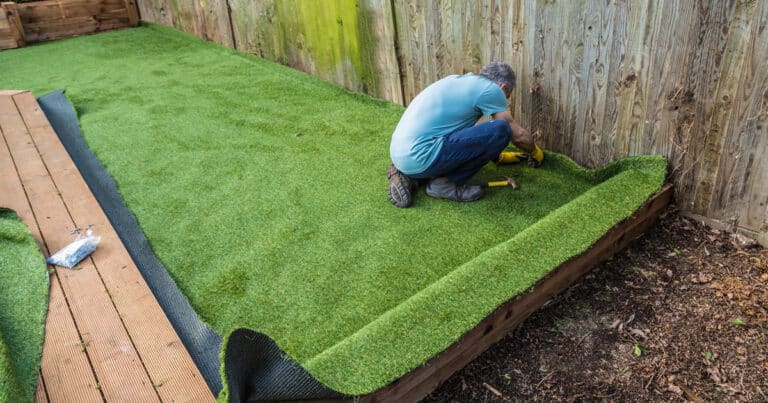
6) Edge fastening and detail work
Strong edging prevents turf creep, curling, and trip hazards. It also defines the look of the whole installation—especially around planters, sidewalks, and paver joints.
- Fasteners: nails/spikes placed at appropriate spacing for perimeter stability
- Transitions: tidy cuts at concrete/pavers and consistent reveal height
- Border solutions: existing hardscape, bender board, or other edge restraints where needed
Clean edge work is so important to the finished look that it’s worth reviewing edging expectations up front. If you want more detail on getting crisp borders, refer to tips to create sharp edges with artificial grass in Vista.
7) Infill, grooming, and final walkthrough
Infill supports the blades, improves stability underfoot, and can influence heat, feel, and maintenance. Final grooming and a walkthrough ensure the surface is even, seams are secure, and edges are locked in.
- Drop infill evenly (in multiple passes rather than one heavy application)
- Power broom/brush to stand fibers upright and work infill down
- Check for low spots, wrinkles, or seam telegraphing and correct before handoff
- Review care instructions for your yard’s use (pets, kids, or purely decorative)
Not all infills perform the same in every yard. If your area gets a lot of dust or leaf litter, you may prefer an approach that prioritizes easier cleaning and rinsing over maximum “spring.”
Specs to compare when getting quotes (table)
When you compare installers, focus on items that affect longevity and day-to-day performance. Use the table below as a checklist for what to request in writing so proposals are easier to evaluate.
| Feature / Metric | What to Ask the Installer to Specify | Vista-Specific Considerations |
|---|---|---|
| Base depth and material | Type of aggregate, planned depth range, and how final grade will match surrounding hardscape | Slopes and occasional heavy rains make correct grading essential to avoid pooling |
| Compaction method | Equipment used (e.g., plate compactor), compaction in lifts, and how low spots will be corrected | Proper compaction helps prevent ripples after hot weather expansion and repeated foot traffic |
| Drainage plan | How water will exit the area; whether regrading, drains, or permeable base changes are included | Yards bounded by walls/hardscape may need defined drainage paths rather than relying on infiltration |
| Seaming approach | Seam placement plan, grain direction alignment, and seam tape/adhesive system | Sunlight angles can make seam lines more noticeable; placement and grain alignment matter |
| Infill type and quantity | Infill material, target pounds per square foot (or total quantity), and grooming method | Dust, pets, and heat management can influence the best infill choice for your yard |
| Edging and fastening | Edge restraint type, nail/spike spacing, and how corners/curves will be secured | Strong edges reduce lifting in high-traffic gates and tight side-yard runs |
Common problems (and what usually causes them)
Most turf failures trace back to base, drainage, or seam/edge work rather than the turf itself. Knowing typical issues makes it easier to spot red flags during installation or in a proposal.
Pooling water or soggy spots
Standing water is usually the result of poor grading, inadequate compaction, or a blocked drainage path. A quick fix like adding more infill rarely solves a true base-level low spot.
- Likely causes: low spots in the base, flat grades, compacted native soil that doesn’t drain, downspout discharge into the turf
- What to request: regrade plan, spot elevation checks, and (if needed) drainage components designed for your yard’s layout
Visible seams
Seams show up when grain direction is mismatched, cuts are sloppy, or the seam isn’t bonded evenly. They can also become more noticeable if the base settles differently on each side.
- Likely causes: grain mismatch, gaps/overlaps, insufficient adhesive coverage, base inconsistencies
- What to request: seam placement plan and confirmation of cure times before heavy use
Ripples, wrinkles, or movement
Rippling is often tied to insufficient fastening, poor compaction, or installation done without allowing the turf to relax. Temperature swings can amplify movement when edges aren’t locked down.
- Likely causes: under-compacted base, skipped perimeter spikes, stretching issues, weak transitions at curves
- What to request: fastening pattern details and a plan for securing high-traffic edges
Maintenance expectations in Vista’s climate
Synthetic turf is lower maintenance than natural grass, but it is not maintenance-free. A simple routine keeps fibers standing up, improves drainage, and helps the surface look consistent year-round.
Vista’s dry season can bring dust and debris that settle into the turf, while occasional storms can wash fine sediment onto the surface. Your maintenance plan should focus on removing organics (leaves, petals) and keeping the infill and blades evenly distributed.
- Weekly or as needed: remove leaves and debris before it breaks down
- Monthly (typical residential): brush high-traffic areas to lift fibers and redistribute infill
- After pet use: rinse as needed and remove solid waste promptly
- Seasonally: inspect edges and seams; address small issues before they grow
If you prefer a hands-off approach or want guidance on keeping turf sanitary and upright, consider scheduling artificial grass maintenance & cleaning—especially for pet zones and shaded areas where debris can accumulate.
How to vet an installer and compare warranties without guessing
The best way to choose an installer is to compare scope, materials, and workmanship details in writing. Warranties can be helpful, but only if you understand what’s covered and what maintenance is required.
Ask for a clearly itemized scope that separates demolition, base work, turf materials, infill, drainage components, and finishing details. Then verify what happens if problems appear: Will they rework the base, reset seams, or adjust grades, and under what conditions?
- Request a line-item scope that includes excavation depth, base material type, and compaction approach
- Ask about drainage responsibility (who is responsible for correcting pooling if it occurs)
- Clarify seam and edge workmanship (materials used and fastening method)
- Confirm safety practices (compactor use, blade handling, adhesive ventilation and cure times)
- Read warranty terms for exclusions related to pets, improper drainage, or lack of maintenance
If you’re researching the broader product category, it can also help to understand what artificial turf is made for and how it evolved, then bring your questions back to how a specific product and installation method will perform in your yard.
Planning your project so it looks right on day one—and years later
A successful install comes from aligning the design with your use-case, budgeting for correct base and drainage work, and choosing an installer who documents their scope clearly. A little planning up front is often the difference between a smooth lawn and one that needs rework.
Before you sign a proposal, walk your yard with an eye for water flow, traffic patterns, and edge transitions. Then ask the installer to explain how they’ll handle those exact conditions—gates that funnel traffic, downspouts that dump water, tight curves, or areas where grade can’t change much because of existing concrete.
- List how you’ll use each zone (pets, play, entertaining, decorative)
- Identify known problems (muddy spots, pooling, narrow access, old irrigation)
- Ask for a written plan for base depth, compaction, and drainage
- Confirm seam placement and edging approach before materials are cut
- Agree on a realistic maintenance routine for your household
When the scope matches the site and the finishing details are done carefully, synthetic grass installation Vista homeowners choose can stay flat, drain well, and look consistent across seasons—without the ongoing watering and mowing demands of natural grass.
Frequently Asked Questions
Get a clear, apples-to-apples turf installation plan for your Vista property
If you’re considering synthetic grass, the fastest way to avoid uneven results is to confirm what your site actually needs—base depth, grading, drainage direction, and how seams and edges will be finished. A quick conversation can help you translate your goals (pets, play, or curb appeal) into a scope you can compare confidently.
Professional guidance is especially helpful when access is tight, removal is involved, or you’ve had pooling before—since those details often determine long-term performance more than the turf style alone.